With engines from .5 cc to 5 cc — ignition, diesel and glow, front-rotary and rear-disc induction — and a flying-frog trademark that stood for "Flies Right Off Ground," Britain's FROG line (1947–1963) makes an ideal collection. A past-president's field guide.
Quite often, a would-be collector wonders: what to collect? Model airplane engines have been made since the 1930s — not only all over the US, but all over the world. There have been ignition, diesel, glow, pulse-jet, and now turbine engines, made as small as .009 in³ and well over 1 in³. Some collectors, like Jim Dunkin, collect only one displacement — .15 in³ (2.5 cc) in Jim's case; his book (THE book) lists 1,646 engines, so you could collect them for a LONG time.
You could collect engines from different countries — did you know engines have been made in Denmark, Moldova, and Turkey? Or stick to one maker: there were 88 different OK Cubs, 229 K&Bs, 97 McCoys, and 311 Foxes. These can be imposing numbers for a beginner.
If you'd like a set of engines of different size, ignition type, induction type, and interesting designs — then why not collect FROGs? And what is a FROG?
Back in 1931, International Model Aircraft Ltd of Britain had a line of ready-to-fly rubber-band models and used the trade name FROG, which stood for "Flies Right Off Ground." The line expanded into kits, a huge range of plastic model kits, and a full line of model engines, made from 1947 until 1963.
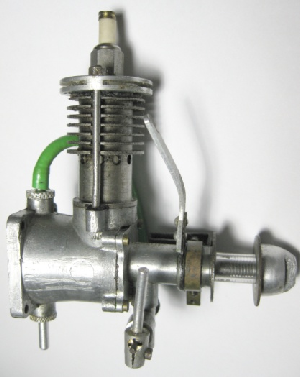
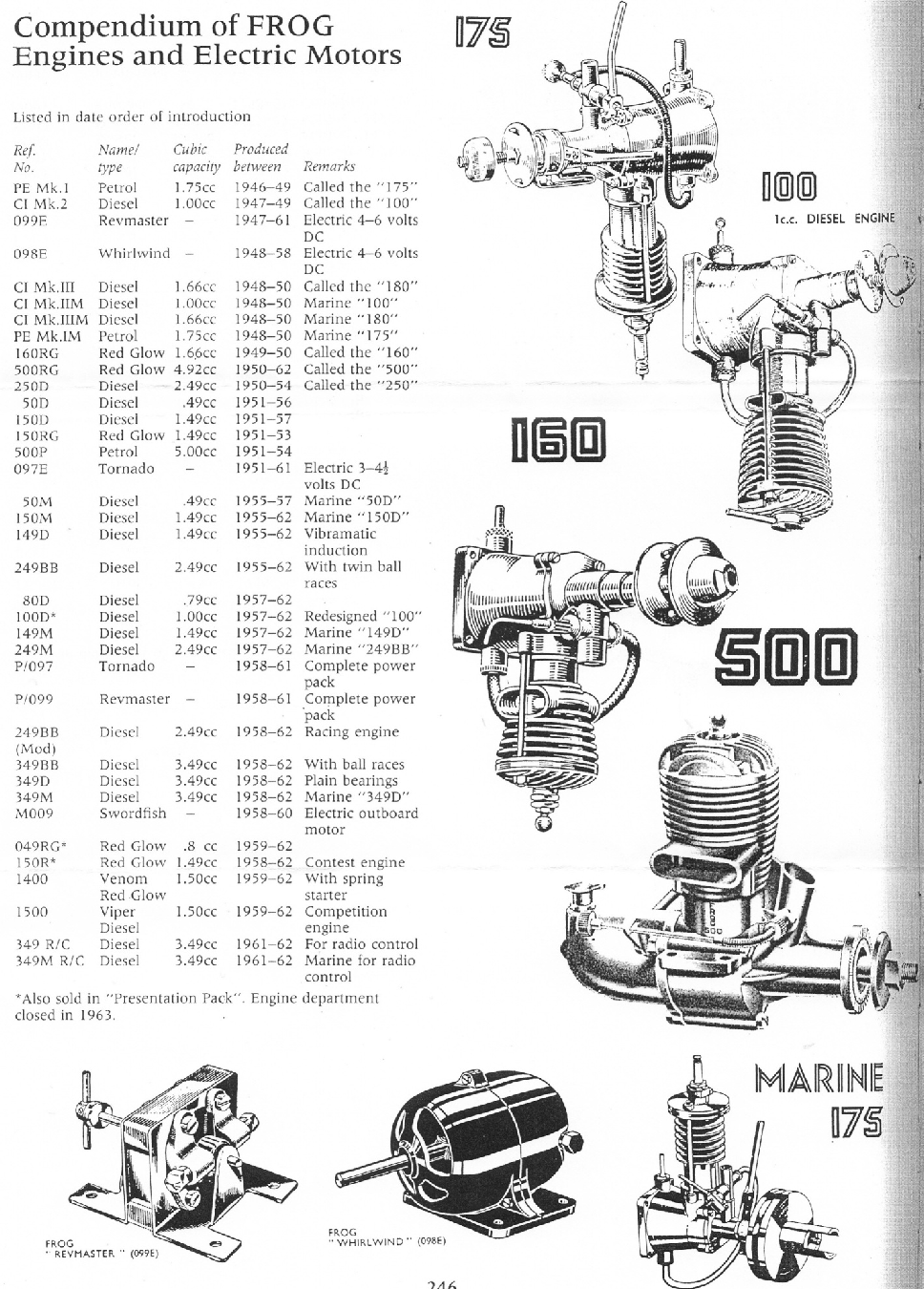
A year later the FROG 100 Diesel was introduced. It looked much like the 175 but had a "tommy bar" to adjust the compression. (FROG engine names are coded with their displacement: divide the name by 100 for the displacement in cubic centimetres.)
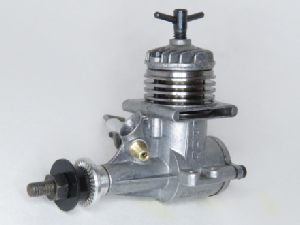
British and European engines are almost always sized in cc. Thus 1 cc (.06 in³) is common; going smaller, .5 cc (.030) is popular, 1.5 cc (.09) very popular, 2.5 cc (.15) of course popular, then 3.49 cc (.20) and 5 cc (.29). Soon after the American .049s hit the market, .8 cc (.049) became popular — the diminutive Frog 80 is an example. Before the FAI set 2.5 cc as the competition maximum, there were many 1.5 cc supporters and engines designed to that standard.
As in the US, control-line flying became popular in Britain, and once the glow plug was perfected it was the preferred ignition source for stunt. But instead of the US .35, British, European and Australian stunt motors were 5 cc / .29 in³. FROG introduced its magnificent FROG 500 in 1950 to compete; the design (with improvements) lasted until 1962 — a 1955 example is pictured. Kind of like the Fox stunt .35.
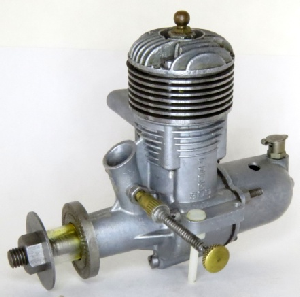
So FROG made engines from .5 cc up through 5 cc. In each case a marine version was sold — usually with a flywheel, universal, and most often a water-cooling jacket. FROGs used front-rotary and rear-disc valve induction; one, the 1.5 cc Vibramatic, used a "clack" valve similar to a reed valve (in fact the valve Bill Brown used on his prototype .28). Due to their early withdrawal from the engine business, FROG made only one R/C engine (also in a marine version), the 1961/62 3.49 cc R/C Diesel. Most FROGs are diesels, given their British origin, but there are glows and, of course, the grandfather ignitions.
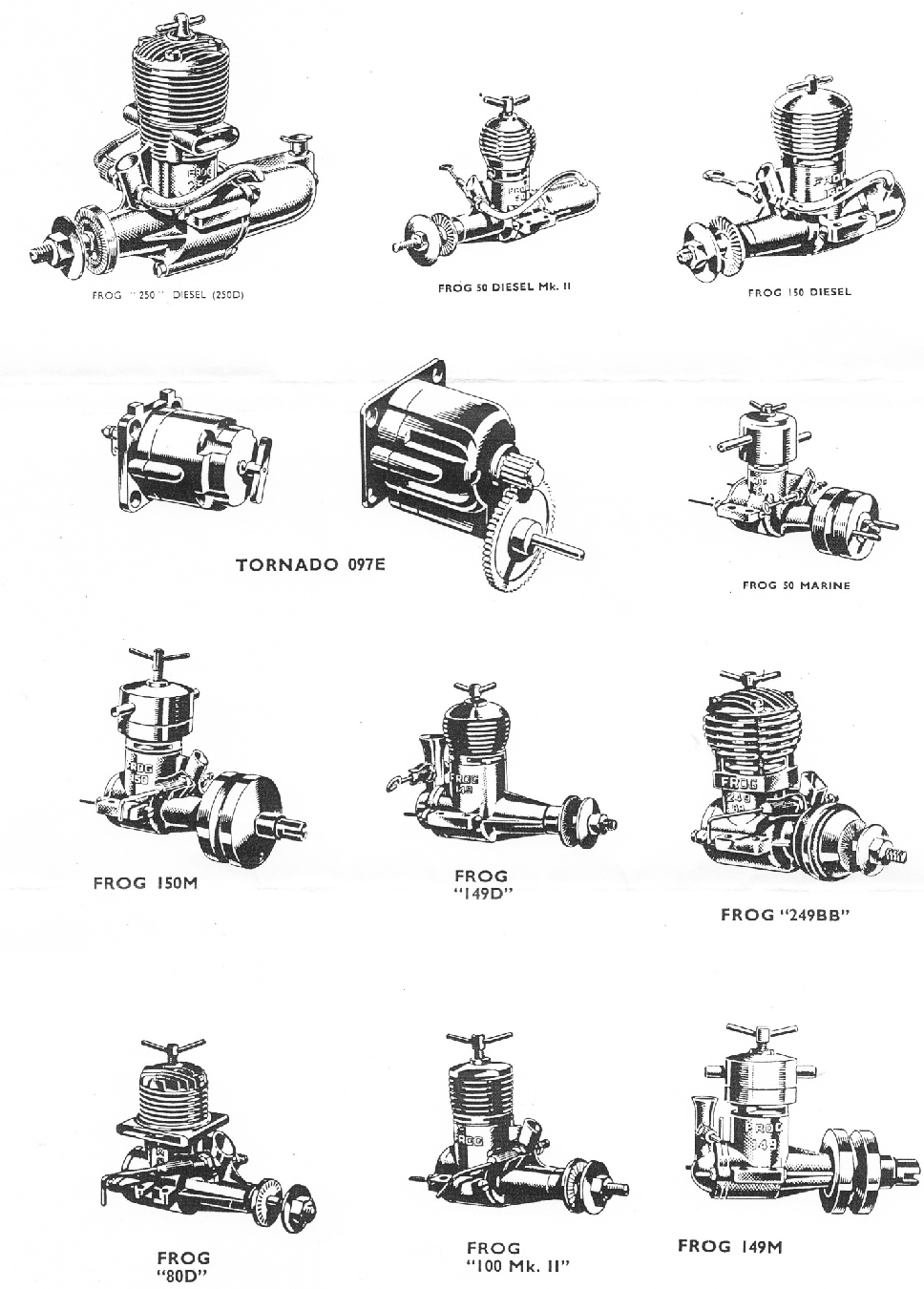
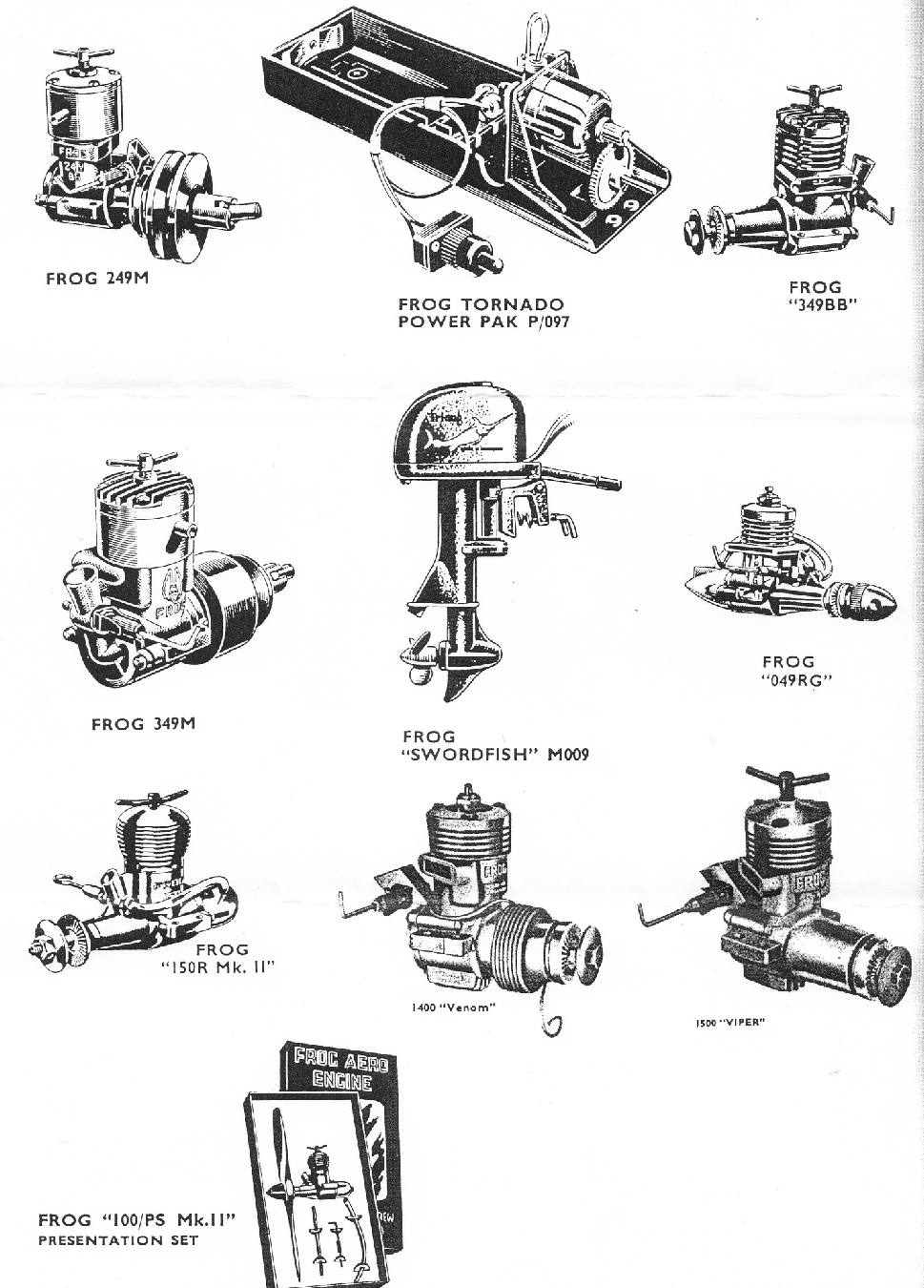
Not counting the marine versions, only 22 different models appear on the following Compendium of FROG Engines (compiled by MECA member Jack Cylenica), drawn from the book FROG Model Aircraft 1932–1976 by Richard Lines and Leif Hellström — often available from Amazon.